1 The Story
The psychiatrist who traded
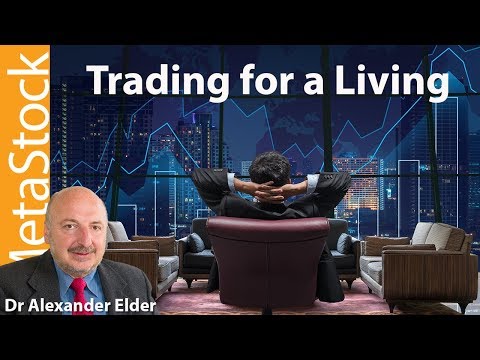
Dr. Alexander Elder (born 1950) trained as a psychiatrist before becoming a professional trader and educator. He drew on his understanding of the mind to explain why most traders defeat themselves.1
His 1993 classic Trading for a Living (and the later New Trading for a Living) laid out a complete framework — psychology, technical method, and risk control — and the 'triple screen' trading system.1
2 The Big Idea
Mind, Method, Money — all three, or you fail
A great system can't save a trader who lacks discipline or risk control.
Elder's framing is the 'three M's': Mind (the discipline and psychology to follow your plan), Method (a tested edge for entries and exits), and Money (risk and position-sizing rules). A weakness in any one sinks the whole — most traders obsess over Method and ignore the other two.1
3 The Method
The three M's & the triple screen
Mind
Master your psychology — discipline, patience, and freedom from the crowd's emotions.
Method
Use a tested approach for analysis and entries — Elder favours multiple-timeframe confirmation.
Money
Strict risk rules: limit loss per trade and per month, so no streak can ruin you.
The triple screen
Check the trend on a higher timeframe, then time entries on a lower one — three filters, not one.
4 Try It Today
Test the idea for yourself
A no-risk exercise
Score yourself, honestly, 1–10 on each of the three M's: Mind (discipline), Method (a tested edge), Money (risk rules). Most traders find one is far weaker than the others — and that's usually what's holding them back. Elder's whole point is to strengthen the weakest M.
5 In Their Words
Alexander Elder, quoted
"The goal of a successful trader is to make the best trades. Money is secondary."— Dr. Alexander Elder, Trading for a Living1
6 The Books & Their Big Ideas
What they wrote — and what to take from it
7 Watch & Read
Go deeper
- TRADERMark Douglas — a kindred voice on trading psychology.
- CONCEPTRisk & Position Sizing
- BOOKTrading for a Living
§ Sources
- Dr. Alexander Elder, Trading for a Living (1993) & The New Trading for a Living — the source of the three-M framework and the triple-screen system.